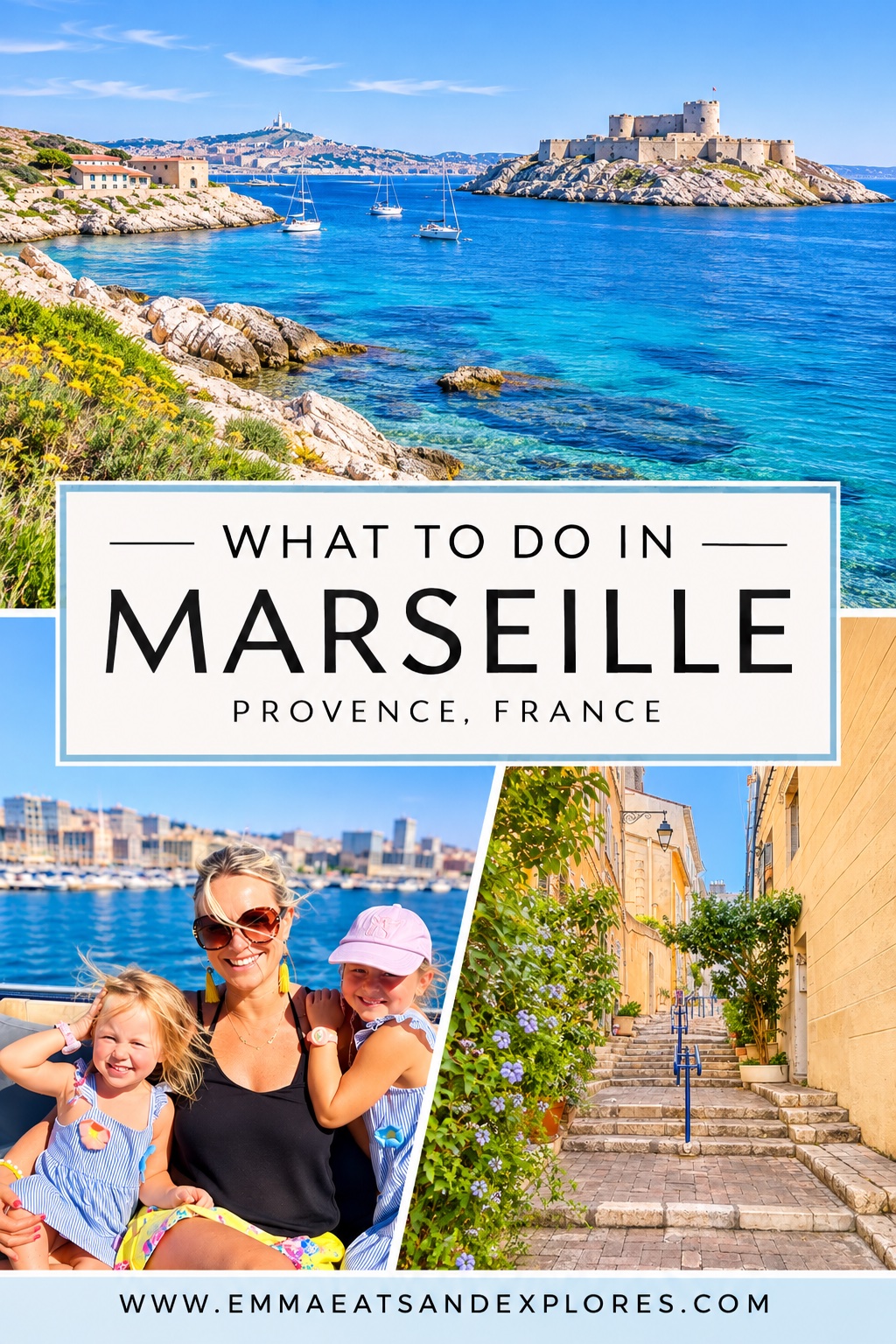
What to do in Marseille, Provence, France
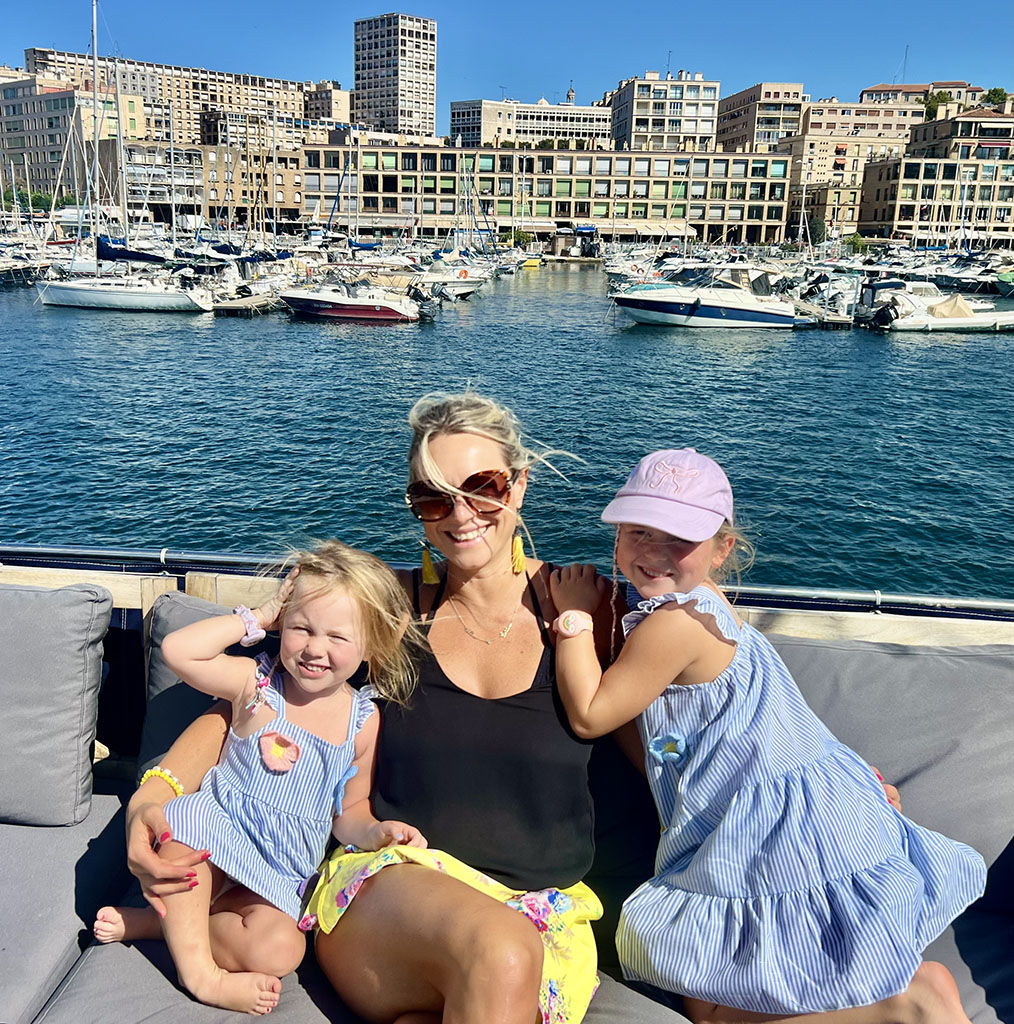
Marseille is a large city on the South coast of France in the Provence region – in fact, it has the second-largest population of any French city after Paris. This summer we discovered it a bit by accident on our trip to Aix-en-Provence when our flight home got cancelled due to bad weather. We had already planned a day on a boat with our friends during the trip, but thanks to some flash floods, we got to explore Marseille in a little bit more depth. Being stranded at the airport, close to midnight with two small kids wasn’t ideal, but we managed to get a new flight booked for two days’ time, giving us a day to explore Marseille.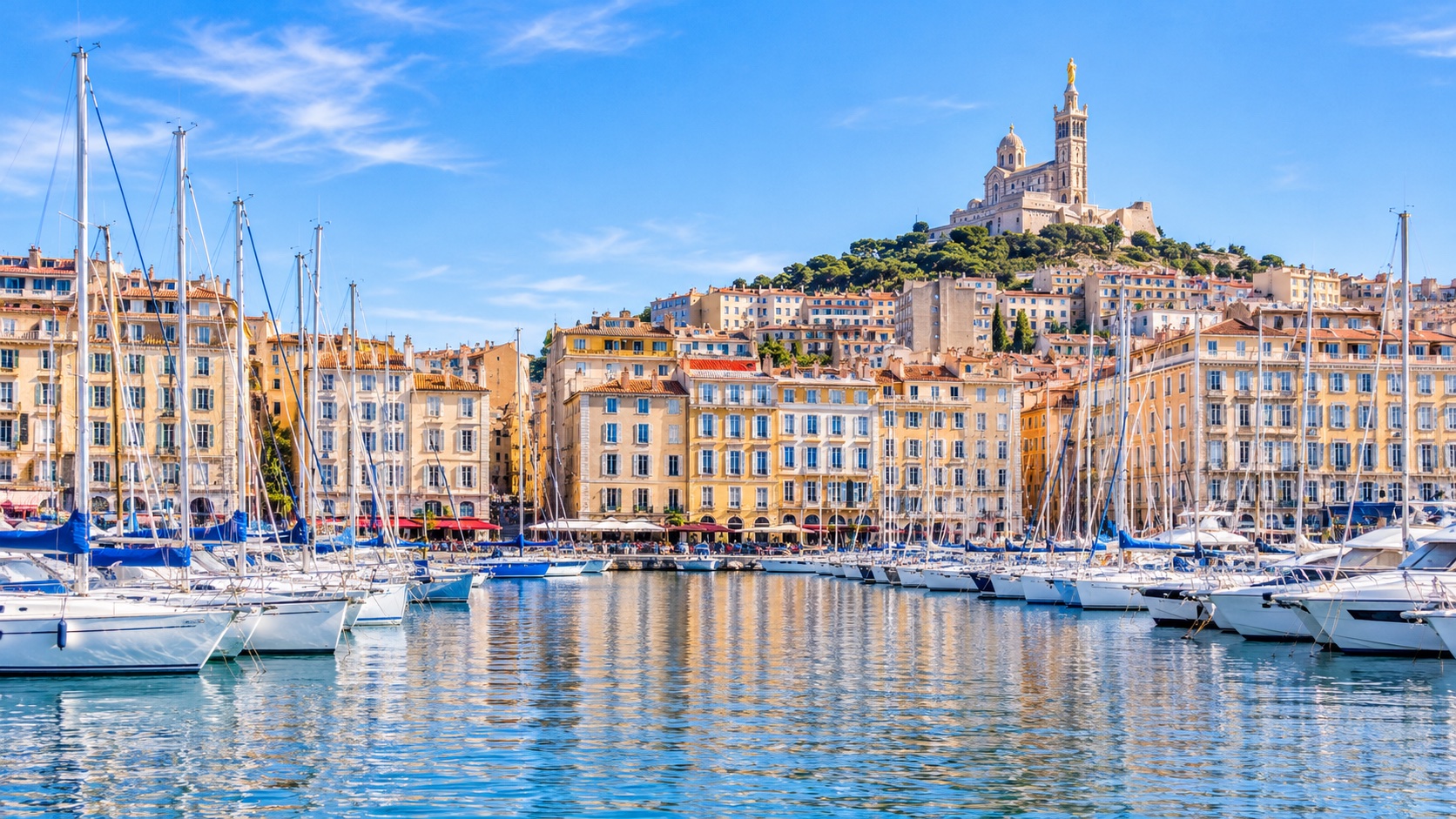
I have to say, from what I knew about Marseille, I wasn’t too excited to explore it. In the past, it had quite a gritty, grimy image and has been made out to be a bit rough, but recently it’s had an image lift! So much so that Vogue made it its town to visit of 2027! Who knew we were ahead of the curve when it came to visiting the up-and-coming places!
Marseille has a Mediterranean climate and actually has the most sunshine hours of any French town! It is a very multicultural city and has many African influences due to the fact that it was a main hub for ships travelling from Africa, the Middle East & Asia. In fact, Marseille remains the first French port, the second Mediterranean port and the fifth European port today.
How to get to Marseille and Getting Around
Marseille has its own international airport, as it’s a bit of a hub for flights to the Provençale region – in fact, it’s the fourth busiest airport in France. We’ve used the airport before to fly into on our trip to Cassis and again this time when we were visiting Aix-en-Provence. From the airport, it is only 20-25 minutes in a taxi (we used Uber) to the main town.
There is also a large train station, the Gare de Marseille-Saint-Charles, which has lots of direct regional services to towns around France such as Aix, Bordeaux and Nice. It is also a TGV hub, meaning you can get from Marseille to Paris in just 3 hours and therefore connect with the Eurostar to London, Brussels, etc., or you can catch the TGV to Geneva, Strasbourg, Frankfurt, etc.
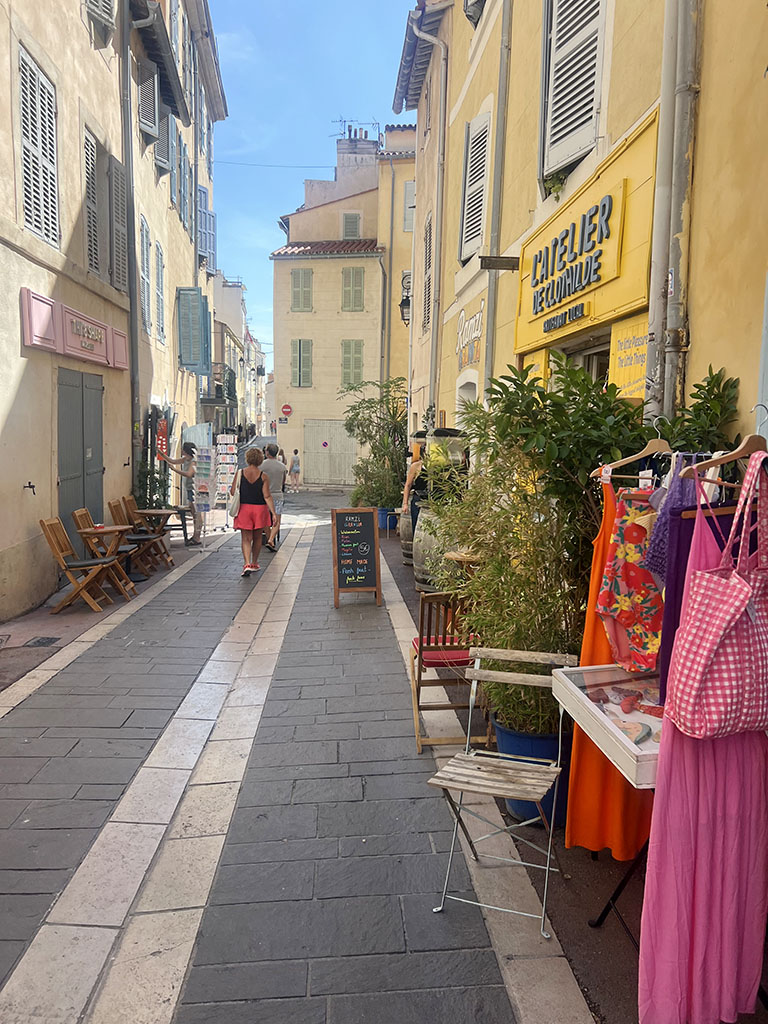
Marseille is a city of two halves. Being on the coast, much of Marseille is centered around the Old Port (Vieux-Port) area where you have wide boulevards and bars and restaurants lining the harbour. This used to be a working port but now functions as a kind of private marina, and the actual port with the cruise ships and container ships has been moved round the corner to a more industrial area. However, if you head into the back streets (Le Panier), you get a totally different vibe: cute cobbled streets full of boutiques and souvenir shops that wind up and down a very hilly topography, opening out onto squares with cafes and bars and a much more local vibe.


Marseille is quite a walkable town; the main areas were all easy to get to on foot, and we only used a taxi to get to and from the airport and to go out to dinner one night. Uber is very easy to use to get around; there was always a taxi when we needed one, and the rates were good. There is a metro and an extensive bus system too.
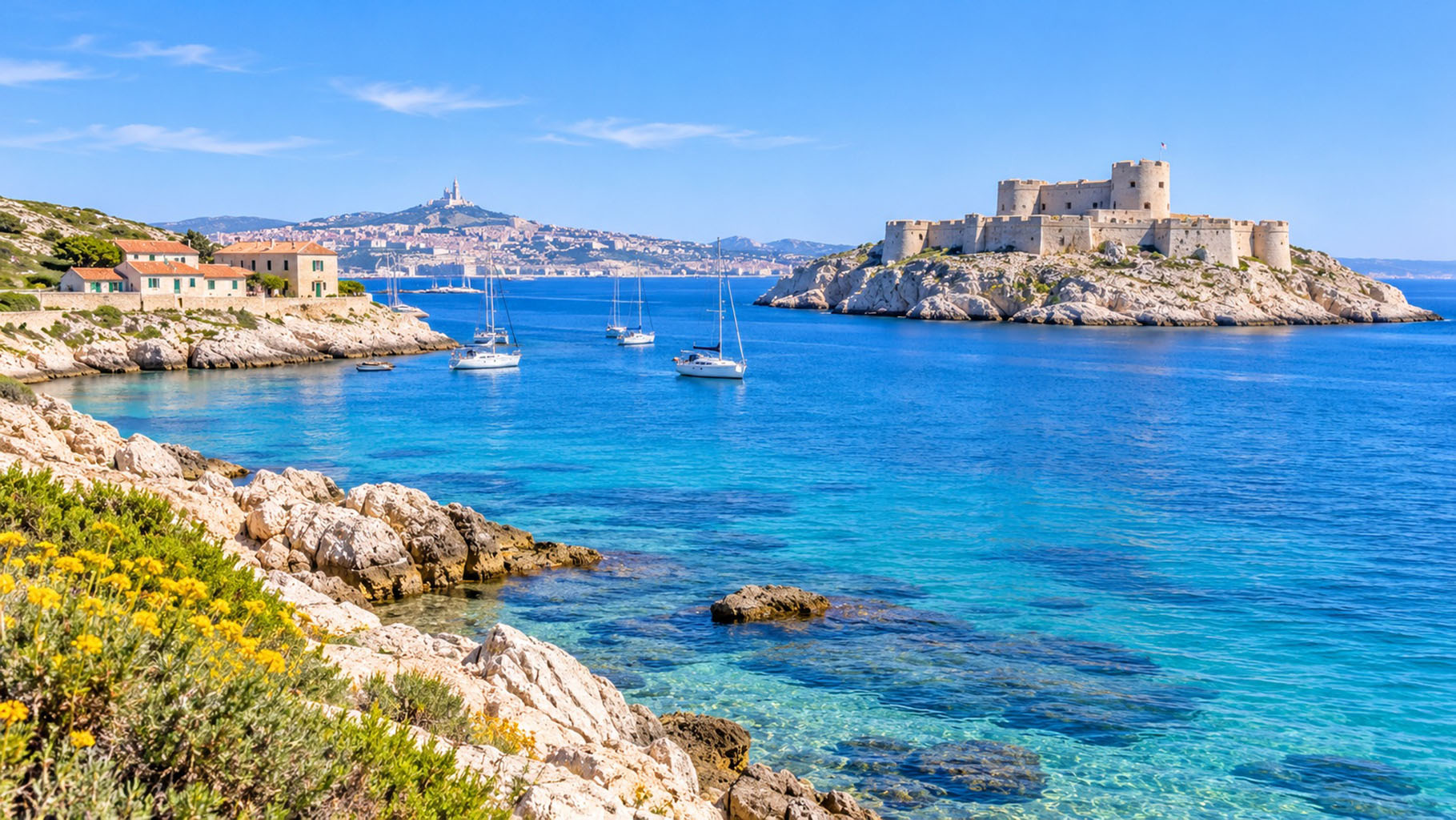
Marseille also has the Frioul archipelago consisting of 4 islands just off the coast, and these can be reached by passenger ferry from the Old Port.
Where to stay in Marseille
So with it being a last-minute ‘we just need somewhere to sleep right now!’ situation, our accommodation wasn’t the nicest, but it was fine. It was an apart-hotel, basic but clean, called The Residhotel Marseille, and one of the few places available that could sleep the 4 of us, with a double bed and a double sofa bed. If we’d been planning an actual trip to Marseille rather than it being thrust upon us, I would definitely have done my research and found some nicer options.
When choosing where to stay in Marseille, you need to decide on the type of vibe you’re looking for, which will help you decide on an area. If you want to be very central, then the Vieux-Port area or the Le Panier area are the ones you want to choose. The Vieux-Port is the bustling hub of the city, great for bars and seafood restaurants with a marina view, shopping on the boulevards, and sipping cocktails from balconies overlooking the harbour. Le Panier is a more rustic, artistic neighbourhood with tiny streets and alleyways, hidden staircases, and bohemian coffee shops and artisan stores.
If you wanted to be a bit further out, you could try the area of Cours Julien, which has lots of nightlife, clubs, and live music venues, or if beachside luxury is your thing, then La Corniche is a more luxurious area; think beach clubs with sundowner cocktails overlooking the ocean.
A few hotels that come highly recommended in the Vieux-Port are The Grand Hotel Beauvau Marseille, the Hôtel-Dieu, an old hospital, transformed into the Intercontinental, or if an apartment is more your thing, then the view from this one captured my eye!
Where to eat in Marseille
Marseille has plenty of delicious dining options, but since we didn’t spend long there or have time to research beforehand, we went with the easiest options we could find.
We had breakfast with a view at the Old Port at a lovely little vegetarian cafe called Eggplant, right on the marina. The girls loved the Nutella pancakes, and the avo toast with poached egg was an absolute winner, quick and simple!
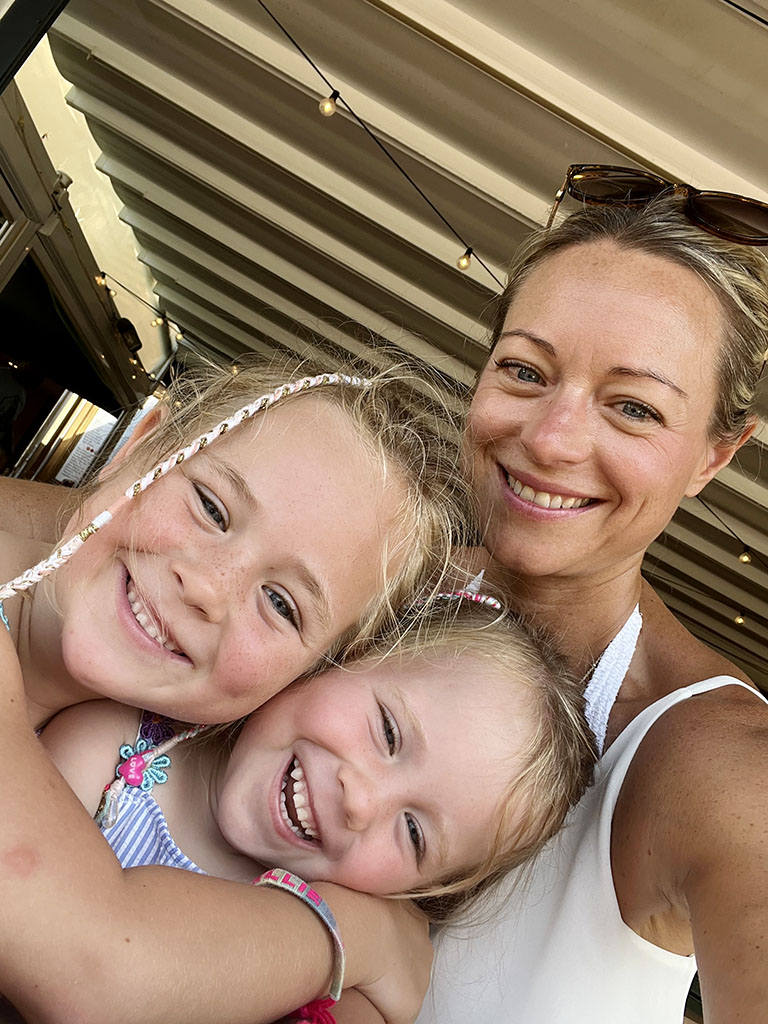
Lunch was guided by Nellie as she was craving her favourite mussels with a roquefort sauce! (She has very sophisticated taste!) After a bit of research, I found a little restaurant on the Frioul archipelago (the group of islands just off the coast) which promised delicious moules frites, so we combined filling Nellie’s gastronomic desires with a day trip out to the islands. There were quite a few dining spots along the edge of the harbour, and we quickly found Lou Friéu, which delivered on the requested mussels, fresh grilled fish for Dan and me, and a beautiful view over the harbour.


It was rustic with plastic chairs and tables and no frills, but the meal was delicious, and the staff were lovely. (They even let the girls take the fish bones to the water to feed the fish – can you feed fish to fish? It seemed a bit cannibalistic to me, but the fish seemed to enjoy it!)
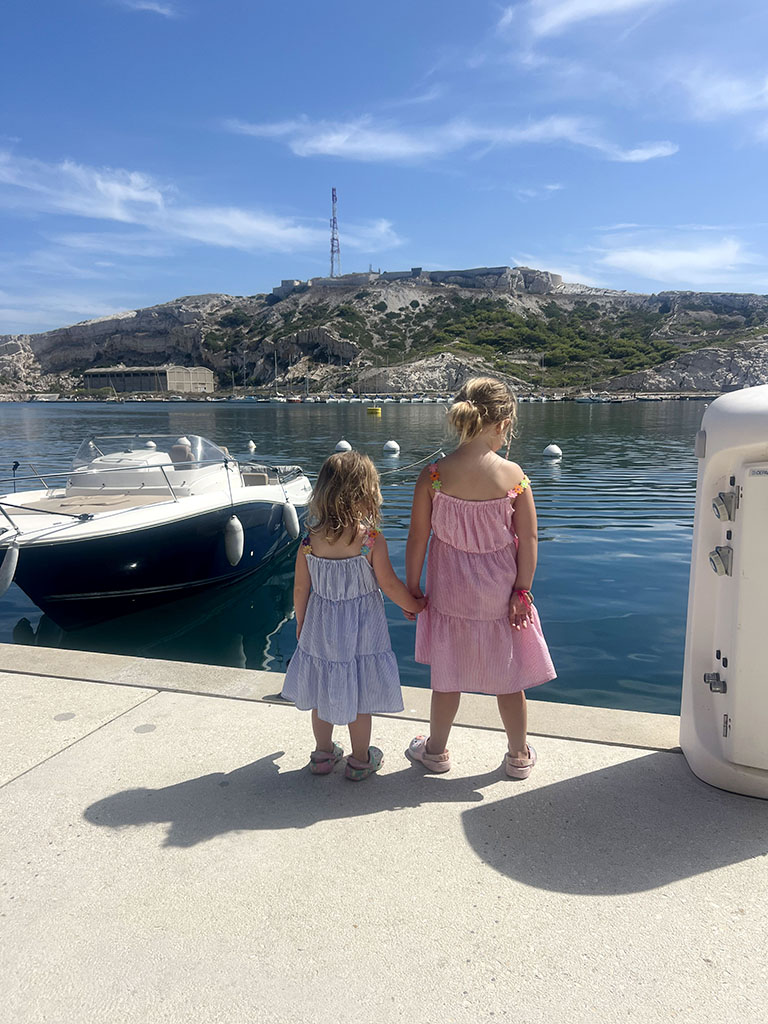
As we only had one night in Marseille (and it was our last night in France), we decided that we wanted a beautiful dinner with a sunset. After a bit of research (what did anyone do before Google?), we discovered that the area to the South of Marseille, La Corniche, had lots of beach bars and clubs lining the coast where the sunset is visible, so we headed to Le Petit Pavillon for dinner with a sunset view. 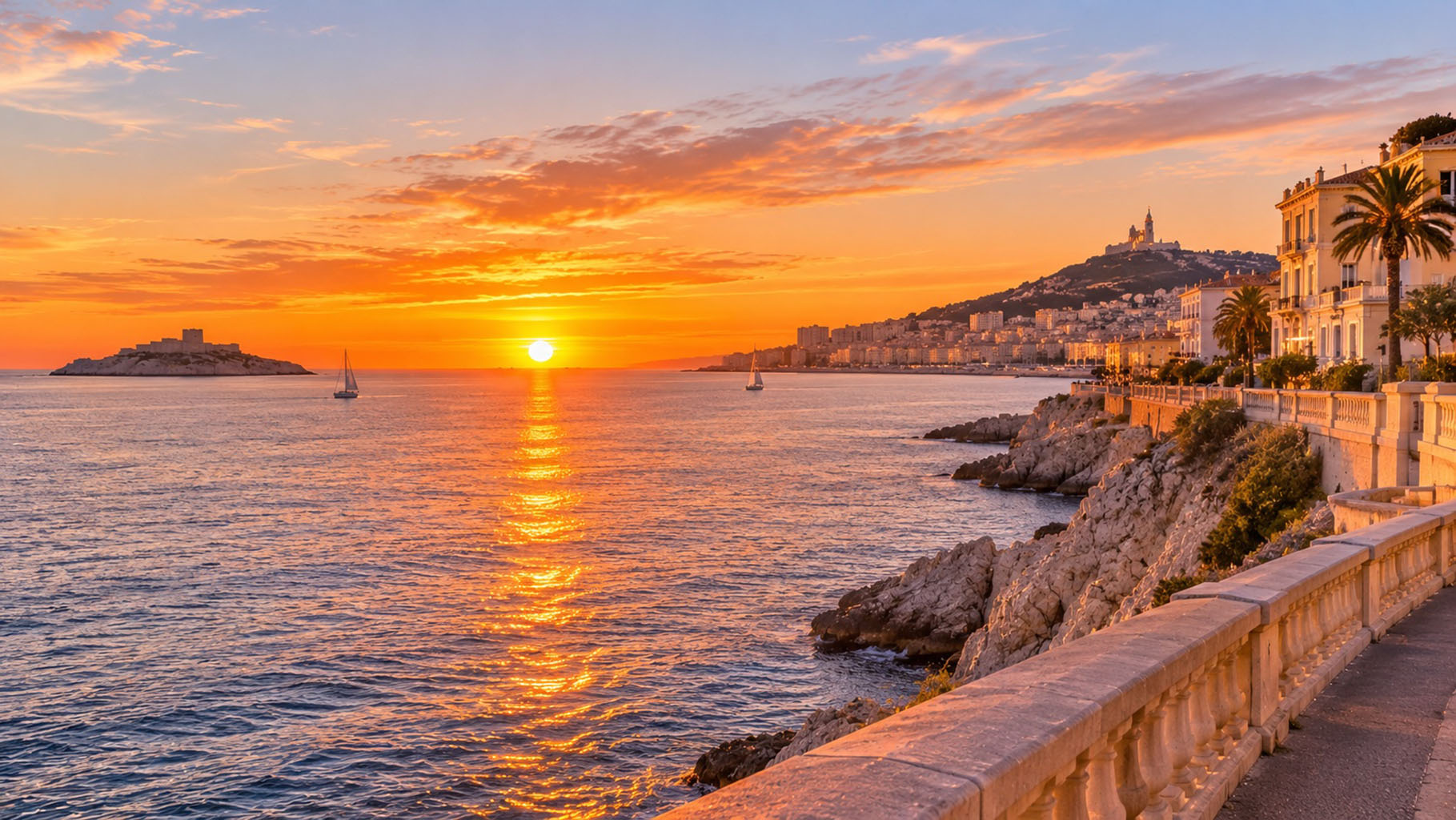
It was a short (10-minute) taxi ride away but worth it for the spectacular views. A glass of bubbles and some delicious seafood, and watching the late-night swimmers in the sea below was the perfect way to end our little impromptu trip to Marseille. And the sunset was absolutely spectacular – the desserts were a firm favourite with the girls too!


If you’re looking for local dishes, then you should definitely try the bouillabaisse; most restaurants serve it, and it is a Provençal speciality. It’s usually served with some toppings you can add yourself: croutons, cheese and a kind of aioli so you can personalise the dish to your taste. Seafood is always a good shout as you are so close to the coast and it is caught fresh every day (the mussels we ate were spectacular). Panisse is also a traditional street snack, fried discs or sticks of chickpea flour, crispy on the outside and fluffy in the middle. Perfect for someone who doesn’t eat grains or gluten!
Marseille is also a city with a lot of African influence, so there is an abundance of dishes from that area of the world to be found. Think tagines, couscous, and plenty of spices!
Had we had more time, I would have loved to visit some of the other beautiful restaurants around, as Marseille really does have an outstanding food scene with lots of amazing Michelin-starred restaurants and some cute cosy cafés. I would have enjoyed trying a few of the more local dishes, but this was very much an off-the-cuff and unexpected trip, and I’m normally a big researcher when it comes to where to eat!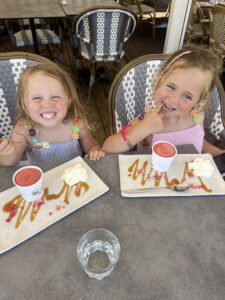
What to do in Marseille
In 2013, Marseille received the accolade of European Capital of Culture. There are plenty of galleries, theatres, museums and even an opera house to visit. Below are a few things I personally have done or would love to do, but there is so much to do in this city that you are honestly spoiled for choice.
- Whilst in Aix-en-Provence, we actually planned a day trip to Marseille with a group of our friends to hire a boat. We picked up our beautiful boat from the Vieux Port and headed out past the Château d’If to the Frioul Islands. We moored off the coast and jumped into the sea, snorkeled, had a picnic lunch on board, and generally enjoyed the gorgeous weather and location.


You can hire your own boat for the day or join an organised cruise along the coast. The Ghimar is the beautiful Grand Banks boat that we hired for the day, and you can hire it yourself for up to 24 people.


- You could also head to the Calanques, a National Park of beautiful limestone cliffs and crystal-clear water forming inlets along the coastline. You can explore them by boat, kayak or canoe, or even on a snorkelling trip. You can also explore them from above by hiking the footpaths and visiting hidden beaches accessible only on foot or by sea.


- Take a trip on a ferry from the Vieux-Port out to the islands of the Frioul archipelago, just off the coast of Marseille. Having previously hired a boat for the day, we decided to try and take the ferry instead to the main island and enjoyed a delicious lunch of moules-frites, looking out over the harbour there. There are then a few walks you can do to hidden beaches where the water was incredibly warm and calm -perfect for the little ones.
 Ferry Trip Frioul Beach


Buy your ticket in advance, though, as once the ferry has sold out a particular time slot, you will have to wait for the next one. You can buy your tickets here and choose between a return to the Frioul Islands or stopping off at the Château d’If as well.
Just outside of the main harbour, in the middle of the sea, is a small island housing the impressive Château d’If. It was built in the 16th Century and was used as a prison until the 19th Century. It is especially famous for being mentioned in Alexandre Dumas’ The Count of Monte Cristo. It is now open to the public, and you can access it by catching the ferry from the Old Port.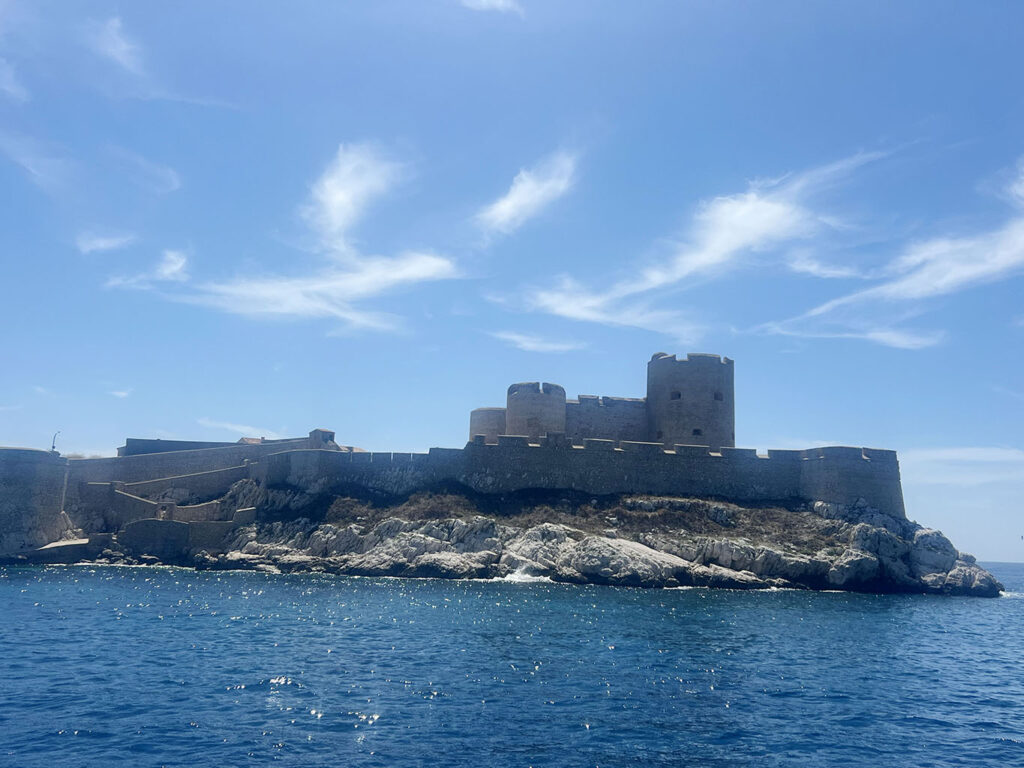
- Take a day trip to Aix-en-Provence (just 25 minutes away) and explore the city of 1000 fountains, or take a trip to Cassis (about 1 hour away) for the beautiful beaches and delicious restaurants that surround the harbour.


- One evening we stumbled across a hidden gem completely by accident. Fort Boyard was part of my childhood, watching Melinda Messenger run around an Old Fort with contestants attempting various challenges to win keys and clues to access the treasure at the end. Well, Marseille has the Fort Boyard experience where you can play the game for yourself! Definitely a fun day out with your friends – think Crystal Maze but better!
- Wander the port and the back streets of Le Panier by yourself or on an organised tour. There are also plenty of food tours if you want top tips from the locals about what and where to eat. Marseille is also famous for its soap; they’ve been making beautiful soaps for over 600 years, so keep a look out for the soap shops (they make great gifts), and if you’re really interested, you can even visit the oldest soap factory and learn all about the soap-making process.
- If walking sounds like too much hard work, you could jump on board the little tourist train and see Marseille in a much more relaxed way. Pick it up from one of the many stops and enjoy an hour-long circuit of the Old Port or the Notre Dame Cathedral.
- Visit the Marché des Capucins in the Old Town near the Old Port – here, you will find Lebanese bakeries, an African spice market, Chinese and Vietnamese groceries, fresh vegetables and fruit. There are shops selling couscous, and shops selling Caribbean food lying side by side with stalls selling shoes and clothing from around the Mediterranean. There is also the daily fish market on Quai des Belges, which we saw. The fish were incredible and almost too fresh – the live octopuses were slightly traumatic. The girls wanted to buy them, just to throw them back in the sea!
Pin What to do in Marseille for later